
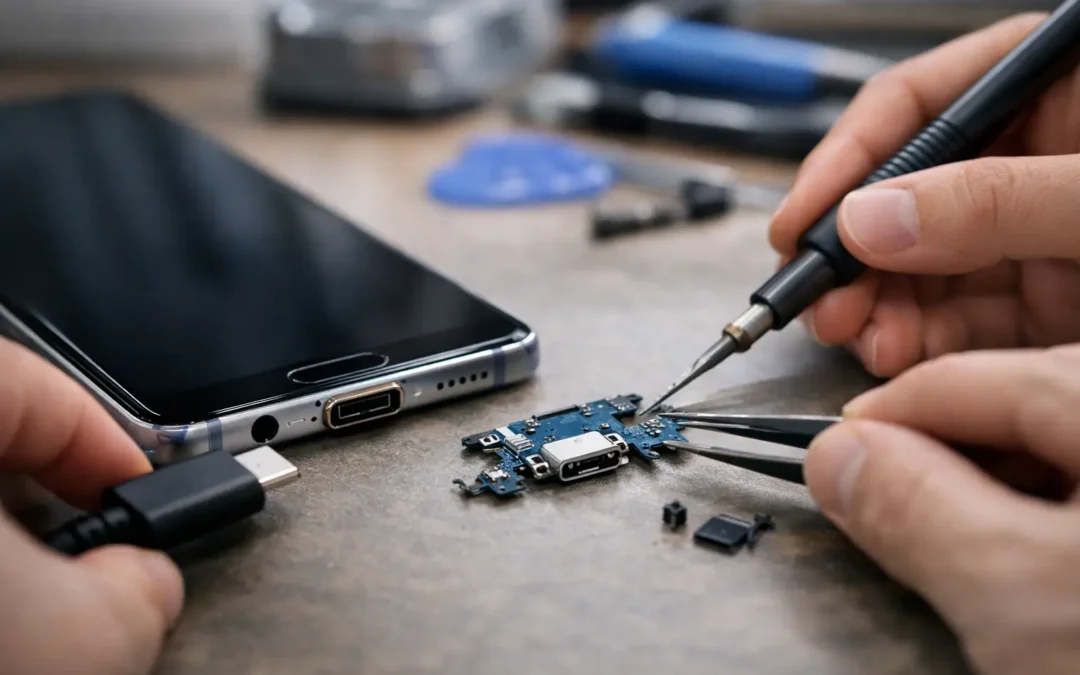
A Samsung phone that only charges at a certain angle can turn a normal day into a scramble. One minute you are answering texts, checking work email, or using maps across Houston. The next, your battery is dropping because the cable keeps slipping, charging pauses, or the phone will not respond at all. If you are looking into samsung charging port repair, the main question is usually simple – can this be fixed quickly, or is it a sign of a bigger problem?
When samsung charging port repair is actually needed
Not every charging problem means the port itself has failed. Samsung devices can stop charging for a few different reasons, and some are much easier to fix than others. The tricky part is that the symptoms often look the same at first.
A worn or damaged charging port usually shows up in obvious ways. The charger feels loose. You have to hold the cable in place. Charging starts and stops. The phone may charge slowly even with a fast charger, or it may not detect the cable at all. In some cases, the phone still wirelessly charges, which is another clue that the port is the issue and not the battery.
But there are other possibilities. Pocket lint can pack tightly into the port and block a proper connection. A damaged charging cable can mimic a bad port. Software glitches can interfere with charging detection. Water exposure can also trigger warnings or corrosion that affects the port area. That is why a real diagnosis matters before anyone jumps straight to a part replacement.
Common causes of Samsung charging port damage
Charging ports take more abuse than most people realize. They are used daily, often multiple times a day, and they sit in one of the most exposed parts of the phone. Over time, normal wear adds up.
The most common cause is physical stress. Repeatedly plugging in the charger at an angle, using the phone while it is charging, or forcing the cable when debris is inside the port can bend or weaken the internal connectors. If the phone has been dropped while plugged in, that impact can loosen the port even faster.
Dust and lint are another major culprit. It does not take much to interfere with the contact points. A phone carried in jeans, work pants, purses, backpacks, or center consoles collects debris fast, especially in a city where people are moving between work sites, school, errands, and the car all day.
Moisture is the bigger concern. Even a small amount of water exposure can lead to corrosion over time. Sometimes the issue shows up immediately. Other times the phone seems fine for days or weeks, then charging becomes unreliable because the damage has slowly spread.
Before you book a repair, try these checks
There are a few simple steps worth trying before you assume the port needs replacement. They are quick, and in some cases they save you from paying for a repair you do not need.
Start with the cable and wall adapter. Test a known working Samsung-compatible charger, not just another random cable from a drawer. Chargers fail all the time, and many charging complaints turn out to be accessory issues rather than phone issues.
Next, inspect the port under good light. If you can see lint or packed debris, that may be blocking the connection. Be careful here. Trying to dig around with a metal pin or sharp object can damage the contacts and turn a small problem into a real repair. If debris is packed tightly, it is smarter to let a technician clean it safely.
Restart the phone and check for a moisture warning. If you recently exposed the device to water or heavy humidity, give it time to dry fully before attempting to charge again. If the warning stays on long after the phone is dry, there may be residue or corrosion inside the port.
Also test wireless charging if your model supports it. If wireless charging works but the cable does not, that points more strongly to the charging port assembly.
What happens during Samsung charging port repair
A proper repair starts with confirming the cause. A technician should test the charging function, inspect the port, and rule out issues with the battery, charging accessories, and board-level components. That matters because replacing the port will not solve every charging problem.
If the port is dirty but otherwise intact, a professional cleaning may restore normal charging. This is the best-case scenario because it is faster and less expensive than replacing parts.
If the port is physically damaged, the repair usually involves replacing the charging port assembly. On some Samsung models, that is relatively straightforward. On others, the charging component is more integrated, which can make the job more delicate and affect labor time. The exact repair depends on the model and how the phone is built.
Water damage changes the picture. If corrosion has spread beyond the port, the phone may need more than a basic part replacement. That is where honest diagnosis matters. Sometimes a port repair is enough. Sometimes the device needs deeper board cleaning or additional work. And sometimes repair may not be the smartest investment if the damage is widespread.
How long does samsung charging port repair take?
It depends on the phone model, part availability, and whether the issue is limited to the port. If it is a straightforward replacement, same-day service is common. If corrosion or internal damage is involved, the timeline can stretch because the phone needs more testing and cleanup.
That is one reason local repair matters. Most people do not want to mail out a phone and wait days just to find out whether the issue is simple or serious. If your phone is your work line, your kid pickup tool, your camera, your wallet, and your GPS, every extra day matters.
A good repair shop should be clear about turnaround time before the work starts. You should know whether the fix is likely to be quick, whether parts are in stock, and whether there is any risk that the charging issue points to something larger.
What Samsung charging port repair usually costs
There is no single price that fits every Samsung model. A newer Galaxy device may cost more to repair than an older model because of parts pricing and device complexity. A simple cleaning is obviously cheaper than replacing the charging port assembly. Water-damaged phones can cost more because diagnosis and restoration take more time.
The cheapest quote is not always the best deal. If poor-quality parts are used or the diagnosis is rushed, you may end up paying twice. On the other hand, not every charging issue requires an expensive repair. A trustworthy shop should tell you when a lower-cost fix is enough.
For most customers, the best value is not just the sticker price. It is getting the phone charging correctly again without repeat visits, delays, or guesswork.
When to stop troubleshooting and get help
If you have already tested a working charger, restarted the phone, and checked for debris, there is not much to gain by forcing it. If the cable only works at an angle, if the port feels loose, or if charging cuts in and out, continued use can make the damage worse.
The same goes for moisture exposure. If there are signs of corrosion or a moisture detection warning that will not clear, do not keep plugging and unplugging the charger hoping it fixes itself. That can aggravate the problem.
This is where convenience matters as much as repair quality. A local shop with same-day service and clear communication removes a lot of stress. For Houston customers who do not have time to chase a charging issue around for three more days, a straightforward diagnosis is often the fastest path back to normal. That is exactly why companies like Phone Repair Ambulance focus on quick local service instead of making people wait around for basic answers.
How to avoid another charging port failure
Charging ports wear out, but a few habits can help them last longer. Use a quality cable that fits properly. Do not yank the charger out by the cord. Try not to use the phone heavily while it is plugged in, especially if the cable is bent off to one side. Keep the port clean, and if your phone gets wet, deal with it early instead of hoping it dries out with no side effects.
Wireless charging can also reduce wear if your model supports it, though it is not a perfect substitute for everyone. It can be slower, and many people still need a wired connection for faster charging or data transfer. Still, using wireless charging part of the time can reduce stress on the port.
A bad charging port does not always mean the phone is at the end of the road. Sometimes the fix is simple. Sometimes it takes a part replacement. The key is getting a real answer quickly, before a minor charging issue turns into a dead phone at the worst possible time.